
Advertisement
.svg)
Today's Explorers
An interview with
An interview with
Vic Milbert and Pauline Delhez
September 28, 2026
6
min read
by
Charles Forman
Where are you from?
Vic is from Luxembourg and Pauline is from Belgium.
When did you start your interest in exploration?
Vic: As a kid, I used to be glued to the TV, watching documentaries on National Geographic and travel series that made me dream about faraway places. My younger self made the decision quite early that I would one day travel to these places. Later in life, I was able to travel quite a bit through Europe for my job as a cattle specialist. Visiting Pauline in Australia cemented my desire to explore more of the world.
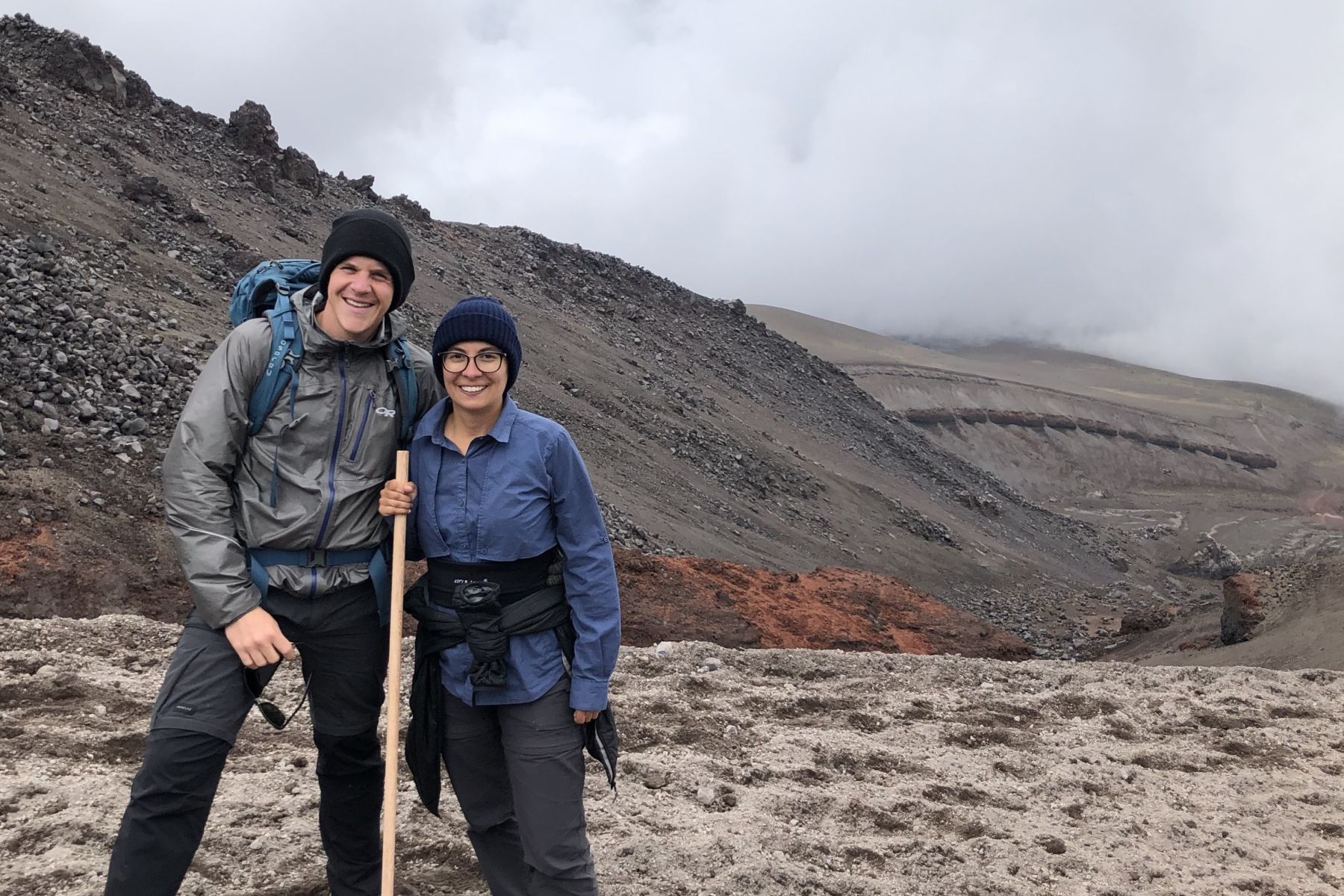
Pauline: My interest in exploration started when I was 24, during my PhD. I had the opportunity to do a six-month research stay in Australia (Melbourne), and that was a game changer. It was the first time I had travelled so far, on my own, and with some financial independence. I said to myself, “Maybe I’ll never have that chance again. I need to make the most of it and enjoy my time there.” So, I took every bit of free time I had to travel, explore the country, and meet people from all over the world.
What is a brief understanding of your background story up until you started seeking adventure?
Vic: I grew up on a dairy farm in rural Luxembourg. It’s a life with almost no holidays. My parents managed to carve out a week each year to go and relax at the beach. I am very grateful for this childhood, as it taught me how to deal with the natural elements and be self-reliant, skills that are important when it comes to breakdowns and fixing things. I studied animal sciences in Belgium and Germany, so I was able to look beyond our borders quite early on. After my studies, I went to work abroad as a cattle nutrition specialist and salesman, which pushed me out of my comfort zone. I took my first flight at the age of 27, first to Texas and later to Australia to visit Pauline. That’s where it all started.
Pauline: I had a fairly standard childhood. Like Vic, my parents are dairy farmers, so I spent a lot of time outside as a child, and I’ve always been very curious and interested in nature and observing my surroundings. However, we travelled very little, and I didn’t have many opportunities to explore further or step out of my comfort zone as a child or teenager. I left my family home to study bioscience engineering at university. I took my first flight at the age of 22, during my master’s, for our university promotion trip to Romania, and then spent four months studying in Scotland. That was a big step outside my comfort zone and, to be honest, quite stressful for me at the time. I had always been quite shy and anxious by nature. After that, I pursued a PhD, which gave me the opportunity to spend six months in Australia for a research stay. That experience really changed my perspective. It was my first real taste of travelling independently and exploring a different part of the world, and it’s where my journey of exploration really began.
What special skills do you have to help with your explorations?
Vic: I speak several languages and learn new ones quickly. I’m also quite good at rapidly assessing situations and getting a sense of when it’s time to move on or get out of a difficult situation or place. I tend to trust my instincts when something doesn’t feel right. I follow a Mauritanian saying: “Here, living means moving forward endlessly.”
Pauline: I tend to shut up, observe and think. I’m quite rational and analytical, which helps me avoid making rash decisions in stressful or uncertain situations. I’m also quite good at reading the terrain and spotting good places to camp.
Both: Two brains are always better than one! We complement each other quite well: we don’t necessarily look at a situation in the same way, which helps us make better decisions together. We’re also not afraid to knock on people’s doors and ask to visit farms or simply start a conversation. Having worked as a sales representative, Vic has developed a sixth sense for quickly assessing whether people are genuinely open to talking or not, which makes it easy for him to approach people and connect with them. He’s not afraid of rejection.
Where have you explored so far?
Pauline: Before meeting Vic in 2018, I had mainly travelled to a few neighbouring European countries with my family, mostly on short trips. During university, I had the opportunity to spend longer periods of time in Scotland and Australia, and that’s when travelling really started to become a bigger part of my life.
Vic: Before meeting Pauline, I had travelled mainly around Northwestern Europe, as well as to Texas in the USA.
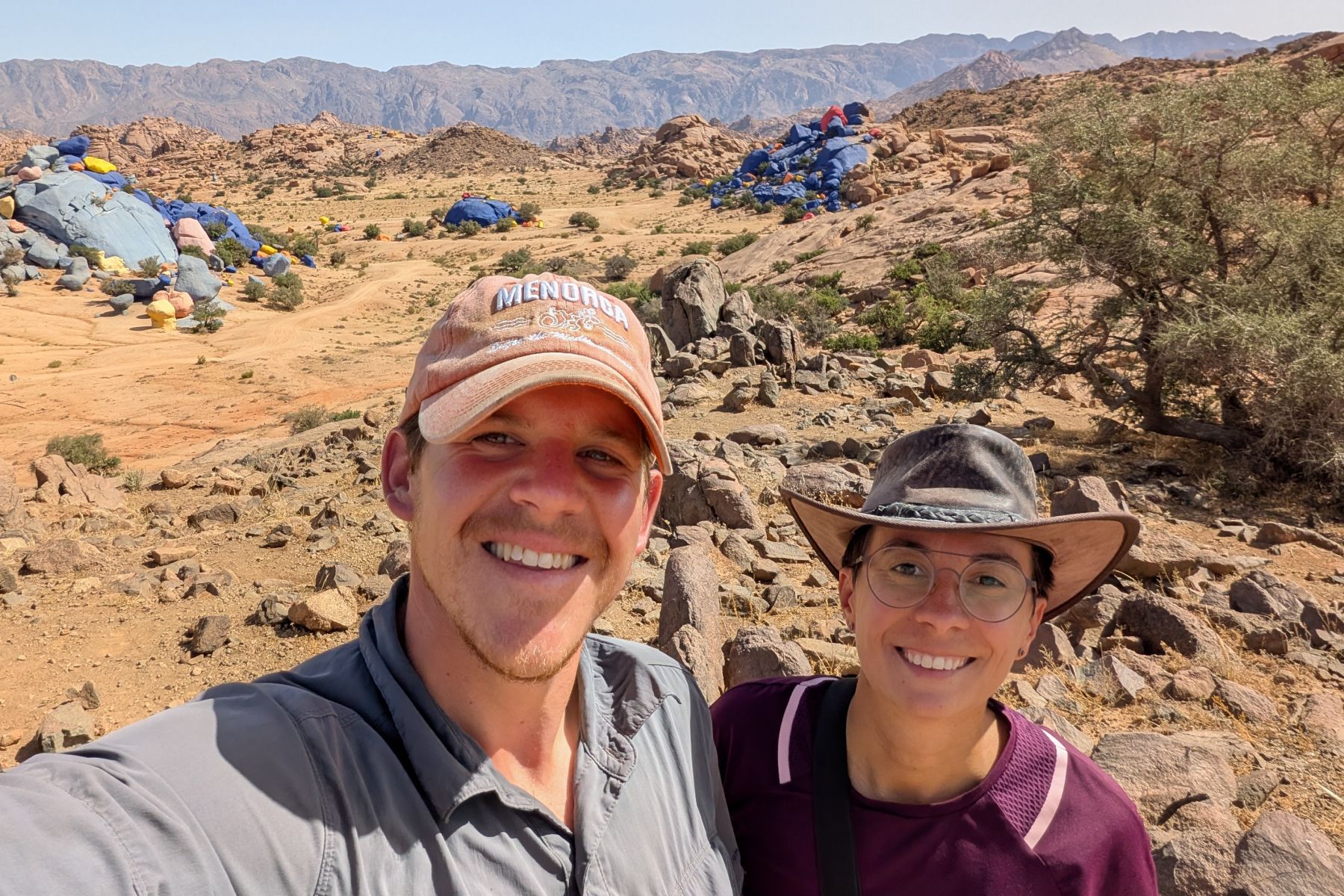
Both: We travelled quite extensively around Europe, including Scandinavia, Central and Southern Europe. We also explored South Australia and Tasmania. In 2021-2022, we travelled together through Latin America, including Mexico, Guatemala, Ecuador and Peru, as well as the United States and Central Asia, where we visited Kazakhstan and Kyrgyzstan. Now we are on our biggest journey yet: travelling across Africa. Since May 2026, we have explored Morocco, Mauritania, Senegal and The Gambia, with many more countries still ahead of us.
What is a brief understanding of your adventures so far?
As children, we mainly experienced the kind of classic holiday travel that most families do.
In 2019 and 2020, we took our very first short road trips: first in a rented van in Australia, and then in our everyday car with a very basic setup in Portugal.
Later, in 2021-2022, we took a gap year. We first explored Northern Europe on a three-month road trip with our basic car and a second-hand rooftop tent. We then travelled as backpackers for nine months, exploring different parts of the world and experiencing trekking and wild camping for the first time.
From 2023 to 2025, Pauline also took on solo long-distance trekking, walking around 2000 km on different Camino de Santiago routes, from her home in Belgium to Spain.
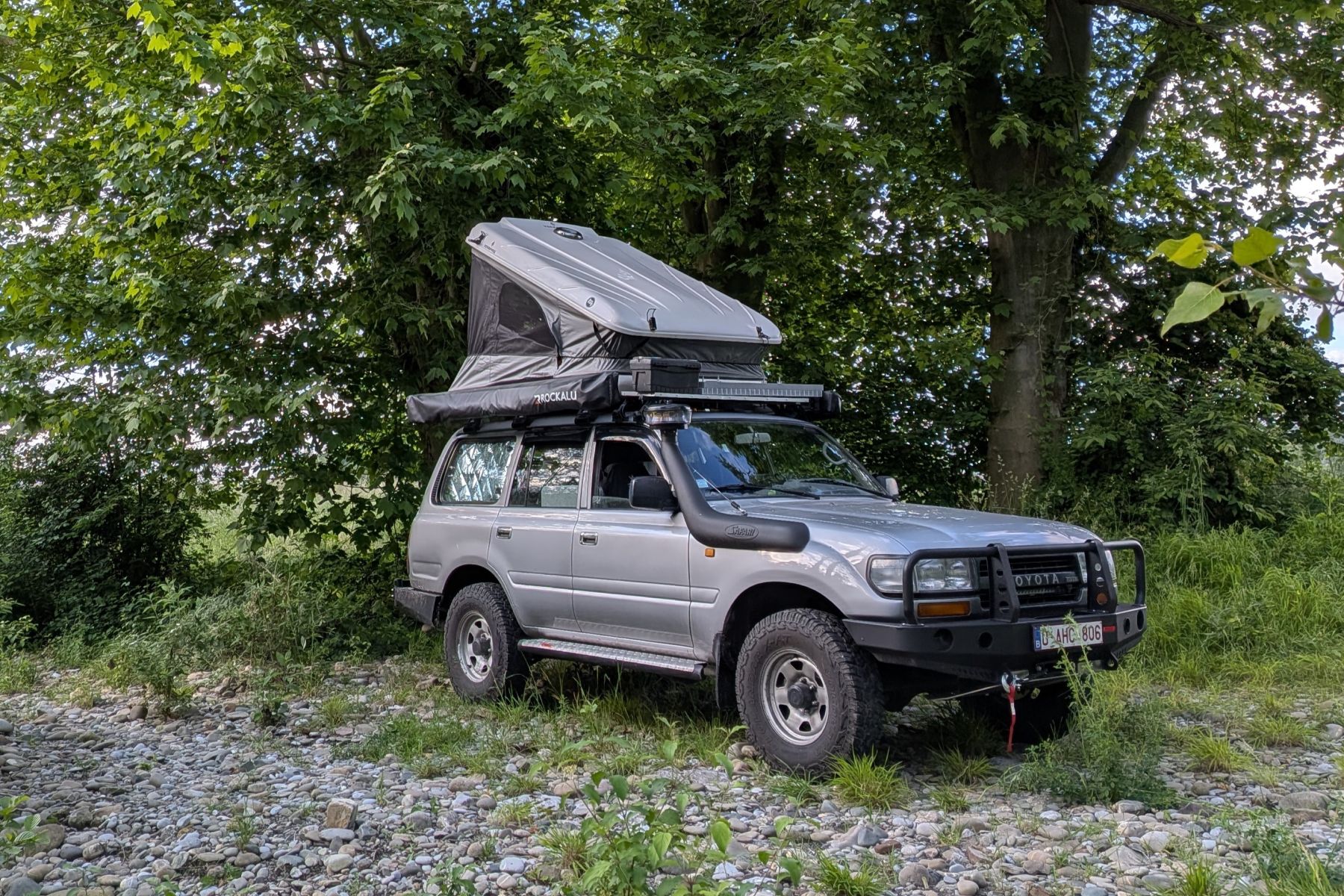
Since May 2026, we have been on our biggest adventure yet: a long overland journey from Europe to South Africa and beyond, travelling in our self-contained 1992 Toyota Land Cruiser, which we have mostly fitted out ourselves.
What are the top three destinations you hope to explore next, and why?
Greater Southern Africa: For the wildlife, especially the famous Big Five, and the opportunity to experience them in their natural environment.
Patagonia: For its vast, breathtaking landscapes and strong sense of wilderness.
Rwanda: Vic has read a lot about Rwanda’s history and is particularly interested in how people managed to rebuild their lives and livelihoods after the war, including through cattle farming and self-reliance. Livestock played an important role in helping rural communities recover and improve their livelihoods, and, of course, cows are his favourite animals!
Where would you recommend others visit?
Kyrgyzstan: For its amazing mountain scenery and friendly people.
USA: The West. It’s so vast, the people are welcoming, and the hiking in the national parks is just amazing.
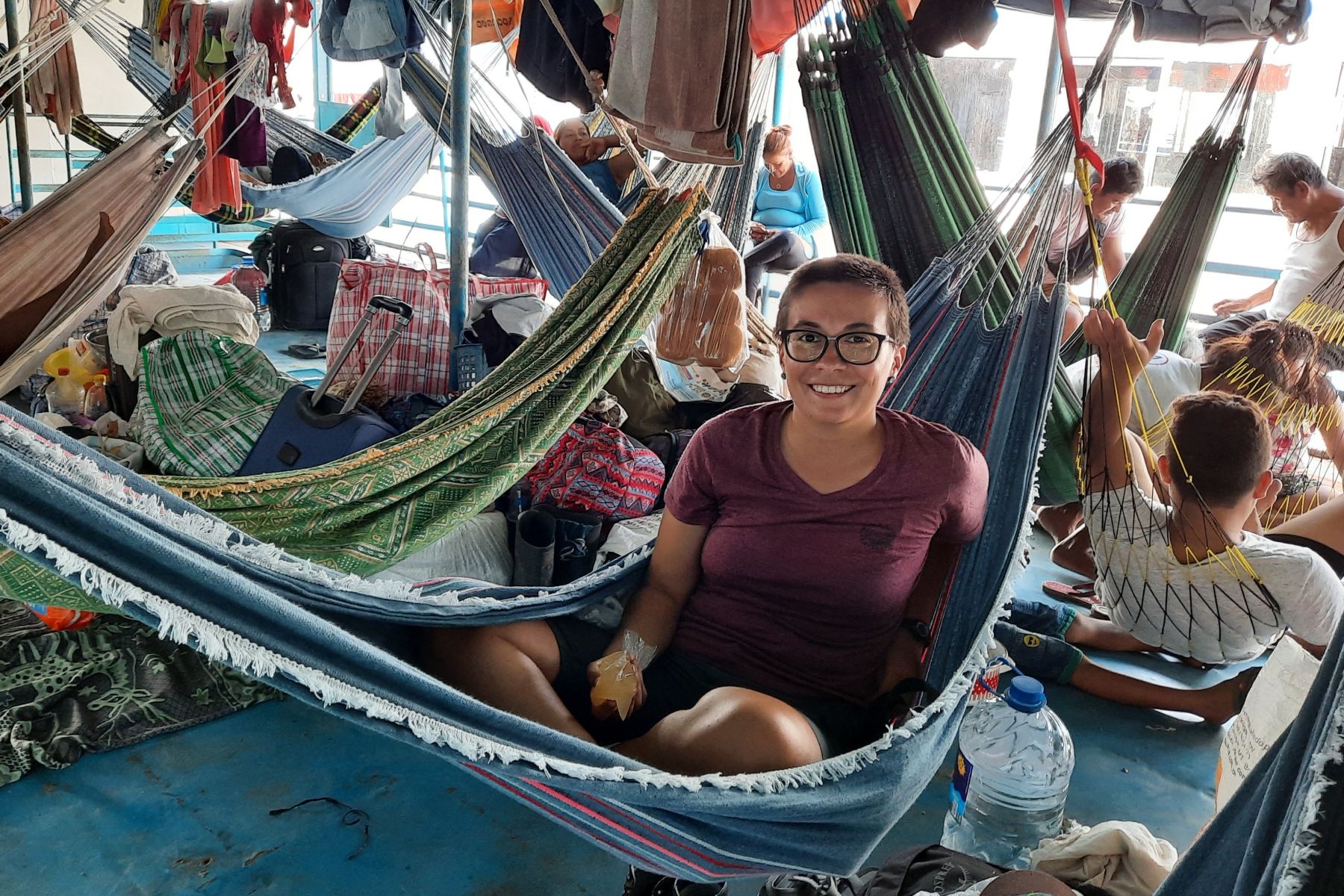
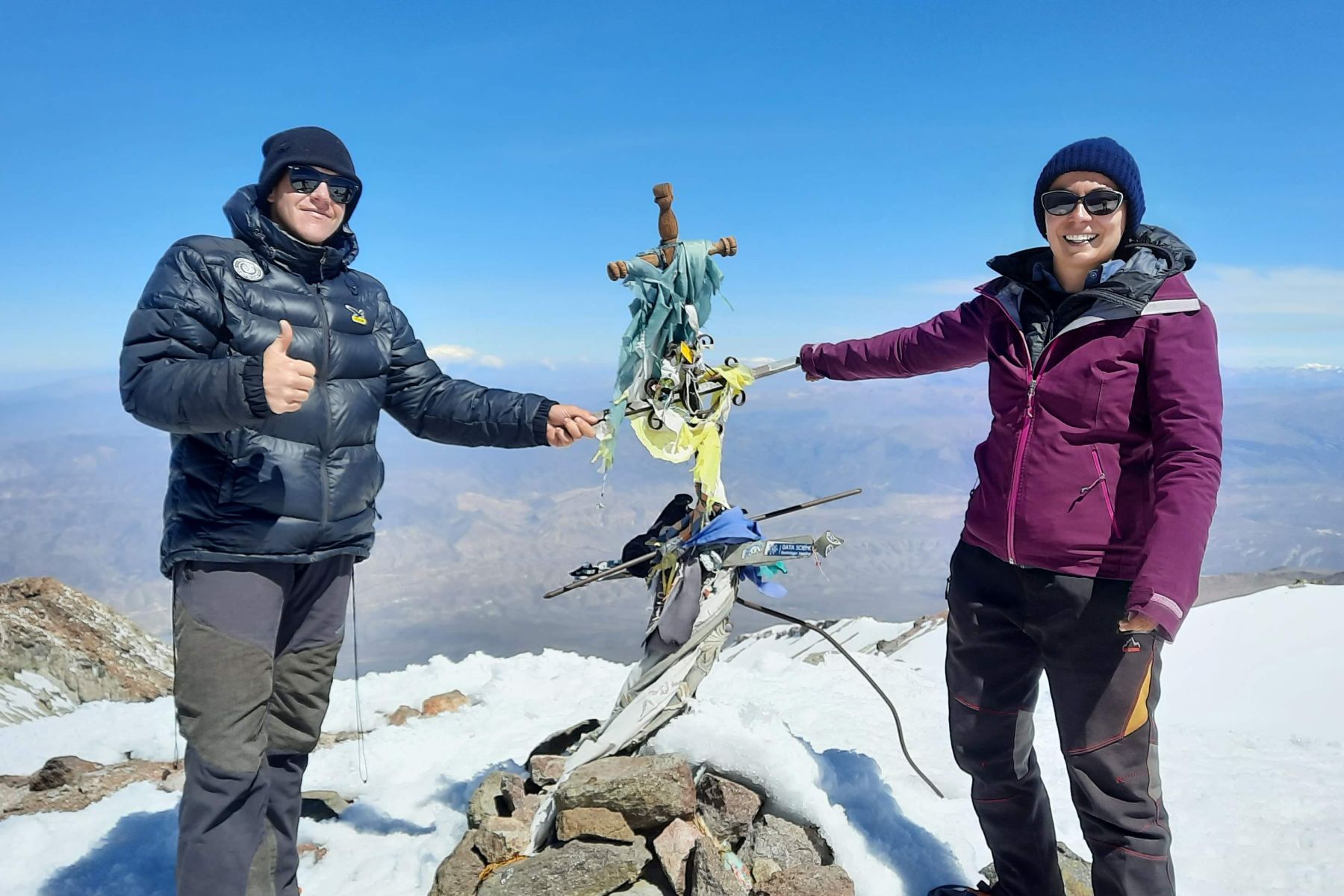
Peru: We spent over two months there and still only saw a small part of the country. The Pacific coast, incredible treks and climbs in the Andes, and the wildness of the Amazon rainforest… Peru is a true backpacker’s gem, especially if you’re travelling on a budget.
How do you primarily travel on your adventures today?
We travel in a 1992 Toyota Land Cruiser 80 with a naturally aspirated 1HZ engine. It’s extremely reliable, especially in hot climates, can handle lower-quality fuel, and is very simple to maintain. It was almost 100% original when we bought it. We’ve fitted it out with the usual overlanding essentials: a rooftop tent, storage drawers, fridge, dual-battery system, etc. Here are three modifications that stand out to us, even if they might not be the biggest ones:
- Custom-made James Baroud window insulation kit: This has been a real game changer for keeping the cabin from heating up too much and preventing people from seeing what’s inside. We can completely shade all the windows, and the rear window covers can stay in place while driving.
- The water system: Vic built a drinking-water purification system that basically gives us running water from a tap at the back of the car. The main components are from Guzzle H2O, combined with a 12-volt Shurflo pump and a 100-litre water tank.
- Side steps: we added side steps because, with the lift kit installed, they make it much easier to open the rooftop tent and reach the equipment on the front roof rack, such as the sand ladders and recovery gear box.
What are five pieces of equipment that you always travel with?
- A bucket: It has many uses: showering, doing laundry, washing dishes, as an emergency toilet (not used yet…), and storing things when we’re travelling.
- A recovery kit: Shovel, sand boards and other recovery gear. We’ve already had to use it several times in the Sahara!
- A smartphone: For navigation, finding wild camping spots, keeping in touch with family, and contacting people along the way.
- Good hiking shoes: For exploring on foot and for situations where sandals simply aren’t secure enough. We’ve learned the hard way that sharp thorns in the savanna or jungle can easily go straight through your feet if your shoes aren’t up to the job!
- A Jetboil: We’ve had it since our backpacking trip in 2021, and we still use it every morning to make coffee or breakfast. It’s incredibly fast and fuel-efficient for heating water, so it has become part of our daily routine on the road.
What inspires you to explore more?
We are very curious by nature and always eager to learn new things. Challenging ourselves and stepping out of our comfort zone is what makes us feel alive.
Beyond that, the main driver of our current journey through Africa is our desire to meet people involved in agriculture and explore the diversity of agricultural and food systems along the way. We created an initiative called Chameleon Livestock Services, through which we document our visits and learnings on our blog, provide technical advice, and take on small missions in the countries we visit.
We are also passionate about hiking and spending time in the wild. Places where we can combine exploration, nature and a sense of wilderness will always have a special place in our hearts.
How do you engage with others?
During our current journey, we engage with local people, farmers and others involved in agriculture. We find contacts through internet searches, Google Maps or recommendations from people we meet along the way (word of mouth is often the best way!). Beyond the agricultural aspects, these encounters help us discover the culture of the countries we visit and better understand how people live and the challenges they face.
Online, we stay connected with people through our blogs, both Chameleon and Pauline’s personal blog. We also post from time to time on social media (Instagram, LinkedIn and Facebook), but we find it quite time-consuming. Because social media content is so ephemeral, we prefer to communicate and share our experiences through our own websites, where the content remains accessible over time.
Why is it important to embrace global cultures?
It helps us understand the diversity of our world and become more open-minded and tolerant of differences. It also helps us grow as individuals and stay open to learning from other people and discovering different ways of living and seeing the world.
What are your goals when you explore?
As mentioned earlier, one of our main goals during our current journey is to explore and document the diversity of agricultural systems in the countries we visit. It was important for us this time to have a deeper purpose rather than simply travelling for the sake of travelling. Through our farm visits and encounters with people involved in agriculture, we want to better understand how people live and work, share what we learn, and contribute our knowledge and experience where we can. At the same time, we want to keep the freedom to explore new landscapes, challenge ourselves, hike and simply enjoy the places we discover.
What are some challenges you have experienced?
The COVID period: We had to postpone our gap year and completely change our initial travel plans, as many borders were closed. In the end, we discovered and travelled through several countries we had never even considered before, such as those in Central Asia.
Our current journey: We have now been waiting for several weeks for our Guinea visa due to restrictions affecting EU citizens. Situations can change very quickly in Africa, so we need to be patient and prepared to wait when necessary, but also ready to move quickly when the situation requires it. It takes a lot of flexibility, adaptability and creative problem-solving.
What has been your most meaningful moment so far?
Meeting a Sahrawi family in the desert of Western Sahara. The way these people have managed to live and thrive in such harsh conditions for generations, relying on their trusty camels, still leaves us in awe. They were incredibly welcoming and generous, genuinely great souls. You could also feel that they carry a heavy, invisible burden, especially those who were born there before the current situation with Morocco. Meeting them and hearing a little about their lives really stayed with us.
How has exploration changed you?
Exploration has given us more confidence and shown us what we are capable of. It has also made us more open-minded and tolerant, and overall, more mature and knowledgeable.
What is the number one lesson that you have learnt through your exploration?
Most things are out of our control. Accept that, take a deep breath, and enjoy the ride.
How do you explore locally?
We do a lot of hiking close to home. It allows us to discover new places and landscapes, which can look completely different depending on the season. Sometimes people don’t realize how much there is to explore locally, or how little they may actually know about their own region or country.
What does the explmore mantra mean to you?
Exploring more of the world means discovering less touristy places, being immersed in nature, discovering new landscapes and agricultural systems, and regularly stepping outside our comfort zone. Engaging with others means not simply travelling through a country, but taking the time to meet people, have conversations and discover how they really live and work. These encounters, especially through our field visits, allow us to understand the local reality beyond what we could see as travellers. And embracing global culture means accepting that there are many different ways of doing things, without always comparing them to what we know from home.
What advice would you give to others who are seeking life changing adventure?
If you feel like doing it, just do it. Don’t wait for the perfect moment, because there is never really a perfect time. Postponing a dream only increases the chances that you will never pursue it. We believe that if you don’t act on an idea within the next 48 hours, even if it’s just the tiniest first step, chances are you never will.
Adventure is also possible right on your doorstep. It doesn’t necessarily mean travelling far away. For example, Pauline’s long-distance hikes on the Camino de Santiago routes were a life-changing adventure. She simply started walking from her own home in Belgium and followed different Camino routes all the way to Spain. It didn’t require travelling far to get started and cost almost nothing, yet it became one of her most meaningful adventures.
Sometimes, all you need is a bit of inspiration and creativity to create your own adventure, one that fits your current circumstances. Don’t believe that adventure is only for rich or privileged people. There are always ways to explore, challenge yourself and experience something new, whatever your situation.
All images subject to copyright.
Today's explorers
Want to share your story?
We would love to hear how your life has changed, because of adventure.
.png)
More stories
Advertisement
©2025 explmore ltd. UK Company Reg. 12586342
