

Advertisement
.svg)
Gear Picks
An interview with
An interview with
9 random things that you will love in your overland vehicle kit
November 23, 2025
8
min read
by
Tobias and Manon - Rafiki on Tour
It’s time to list 9 essential items that work magic on overlanding trips. These are the ones that you might forget, but change (or save) everything. If you’re a first-time overlander or just getting started in the overland sphere, you might not think these items are a must to take with you. But after about 5 years on the road, we can tell you they make a difference. To help you gather the strangest—but—necessary items on your next overlanding trip, we’ve created the list of items you should pack now.
Download our basic overland packing list.
1 Elastic bands
First of all, a ‘rekkie’ (as they would say in Afrikaans). Elastic bands are definitely something we can’t live without. From keeping bags of rice closed to using them as makeshift ‘tools’ when something in or around the car is broken. The downside of elastic bands is that they do tend to break (especially in the hot and dry climate of dry-season Africa), so it is a form of waste, and you might have to buy a new pack once in a while. But for us, they are worth their value!
2 Ziplock bags
Just like elastic bands, Ziplock bags are incredibly practical. We’ve used Ziplock bags for more than just sandwiches to go. What we love about these bags is that they are reusable, even though they’re plastic. We’ve also used ours for temporary car fixes (closing a hose in the engine bay when working on something), for collecting pecan nuts on a farm campsite, and to freeze leftovers or even vegetables that we bought in bulk. Tobias also loves them to store his assortment of rubber o-rings and copper washers.
3 Straps
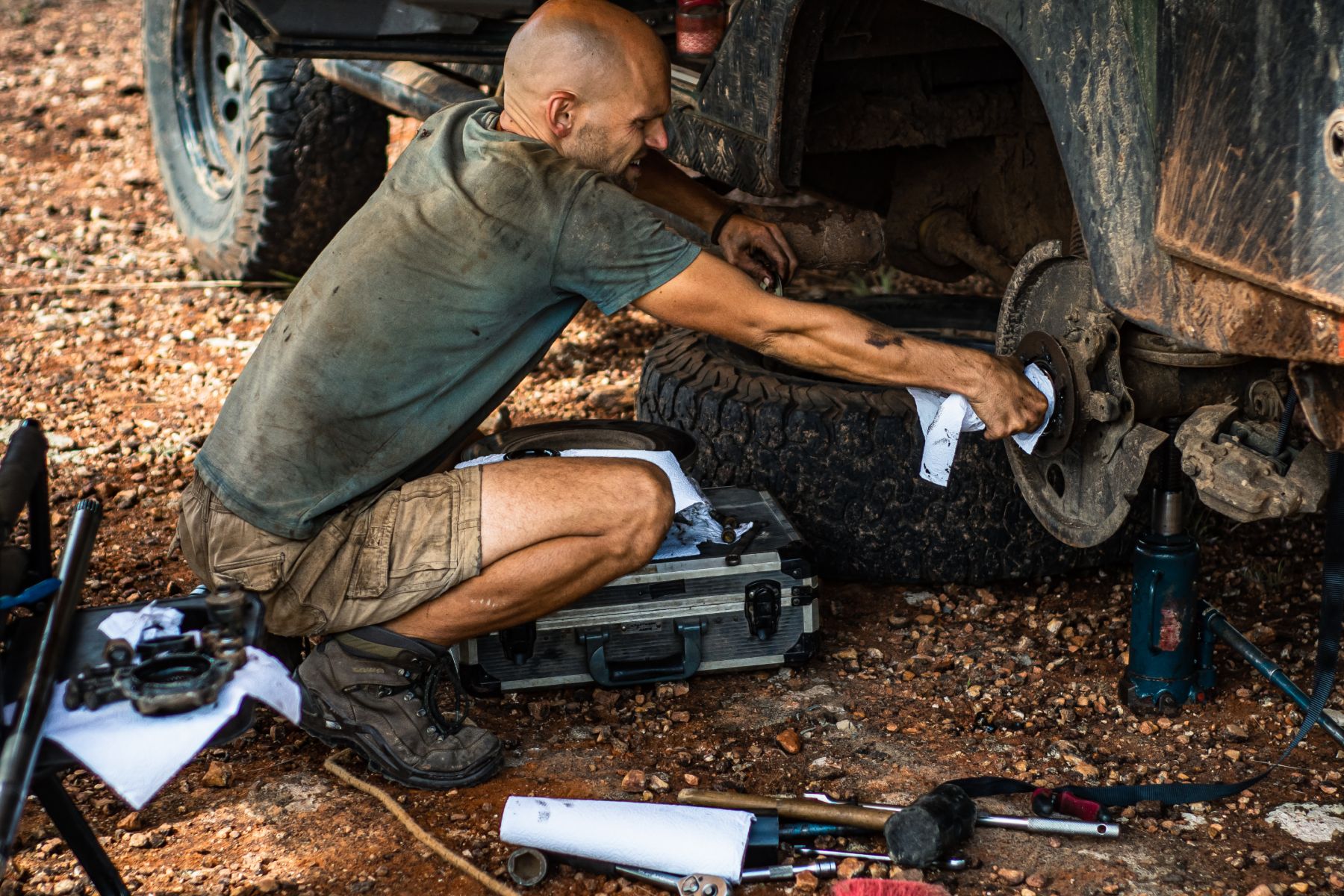
We love straps, in all different sizes, types, and materials. Perfect for strapping firewood on your bonnet, but also to secure your awning when that zipper has failed once again due to dust. We carry different lengths for different purposes and even have one that has a metal cable woven into it, combined with a lockable buckle for secure strapping of your valuable gear. Bring a good selection of reputable brands of high-quality (UV radiation breaks up cheap versions), and you’ll be happy to have brought them along. And do not forget that they are also great at holding things in place when working on the vehicle.
4 Mirror on a telescopic stick
This is one of the cheapest and best little gadgets we have in our arsenal. Having a mirror that you can stick in every little nook and cranny can be lifesaving. It’s ideal for work on the car, or when you’ve dropped a nut or key down a hard to get to place. Additionally, we have used it to assess problems on our engine by having the ability to see what’s going on in awkward and hidden locations.
5 Drybags
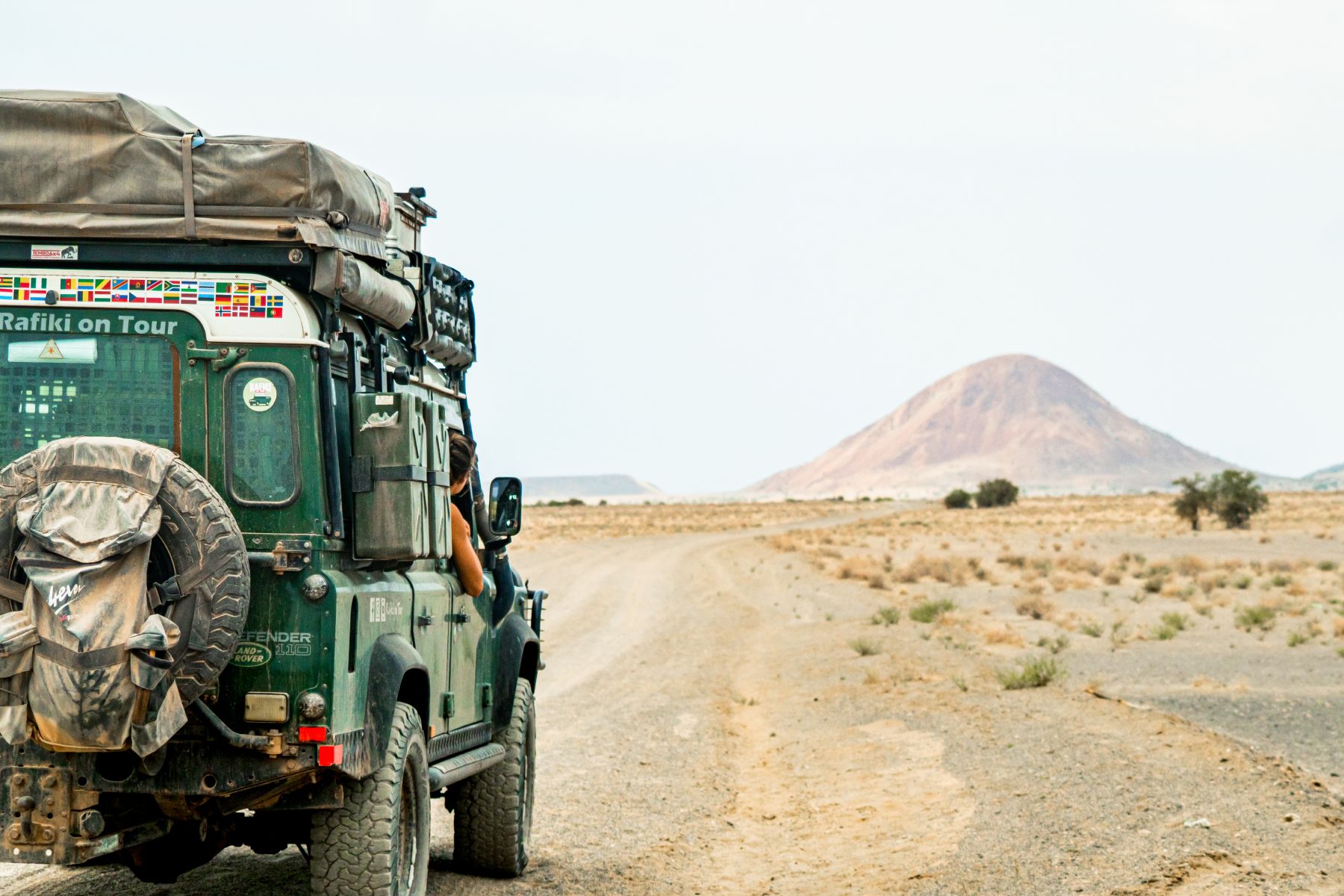
During our travels, we've gathered a few 'extra' things—from beautiful Gabonese masks to an extra blanket for cold nights. Unfortunately, our interior has limited space, so we stash our goods on our roof rack instead. Having a few dry bags, in various sizes, can come in really well in circumstances like ours. But beyond that, they can also be great for packing valuables for an exciting adventure, such as kayaking, waterfall visits, or even on a more leisurely beach day, so you can protect your phone and wallet from the ever-present sand.
6 Flag stickers
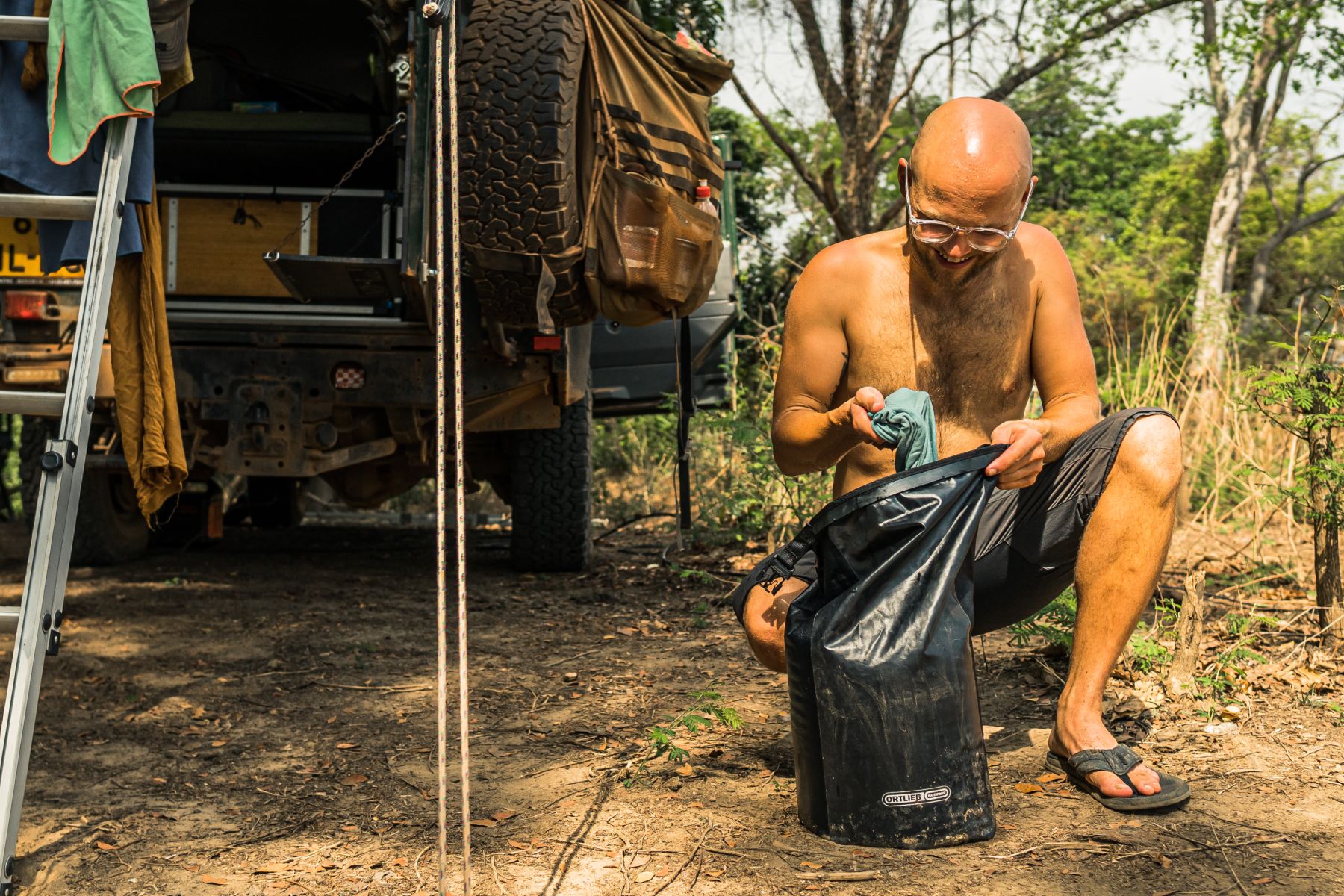
If there is one thing on the outside of our car that gets everyone talking, it’s our flag stickers. From small children to the elderly, we have had so many chats with wonderful people along the way, who are curious about our journey. “Have you really been to all these countries?” is probably one of the most asked questions when they see the flags. Even when we don’t speak each other's language, it’s a way to break the ice and get the conversation going. For us, those stickers are not there to brag. It’s a reminder of all the great—and sometimes not so great—memories, and to enjoy them all. If you get them, make sure to get the UV-resistant version to make sure they last.
7 Spray bottle
A simple spray bottle has saved us many, many times. Now, unfortunately, the ones we bought (somewhere in West Africa) weren’t as high quality as we would've liked, but they helped us. So, what do we use these spray bottles for? For a soap solution! In West Africa, finding water wasn't always easy. We had to get water from a local well (which wasn't always easy to find) or from a good enough natural water source. As a result, we didn't want to waste any water on our dishes. So alongside a silicone spatula to clean our pots, pans, and plates as well as we could, we used a soap solution to spray our dishes and we would wipe that with, in case of severe water scarcity, a paper towel.
8 Bluetooth speaker
Music and movies are two of the things we love. Music at any time during the day, around camp or in the car, and movies in bed before we go to sleep. Since Tobias' laptop speaker died, we have relied on a small Bluetooth speaker when watching movies. It's not great, but at least it works. The music, however, is a continuous pain point. We love to drive with our windows open, so we can wave at the people and really smell/feel the environment—but that comes with a cost: you can't hear the music, or even worse, the podcasts we like to listen to. So, carrying a Bluetooth speaker is a must if you ask us. Oh, and we haven't even said anything about nights at the bonfire with friends, or the time we were playing the sound of bees to keep the elephants away from camp!
9 Duster
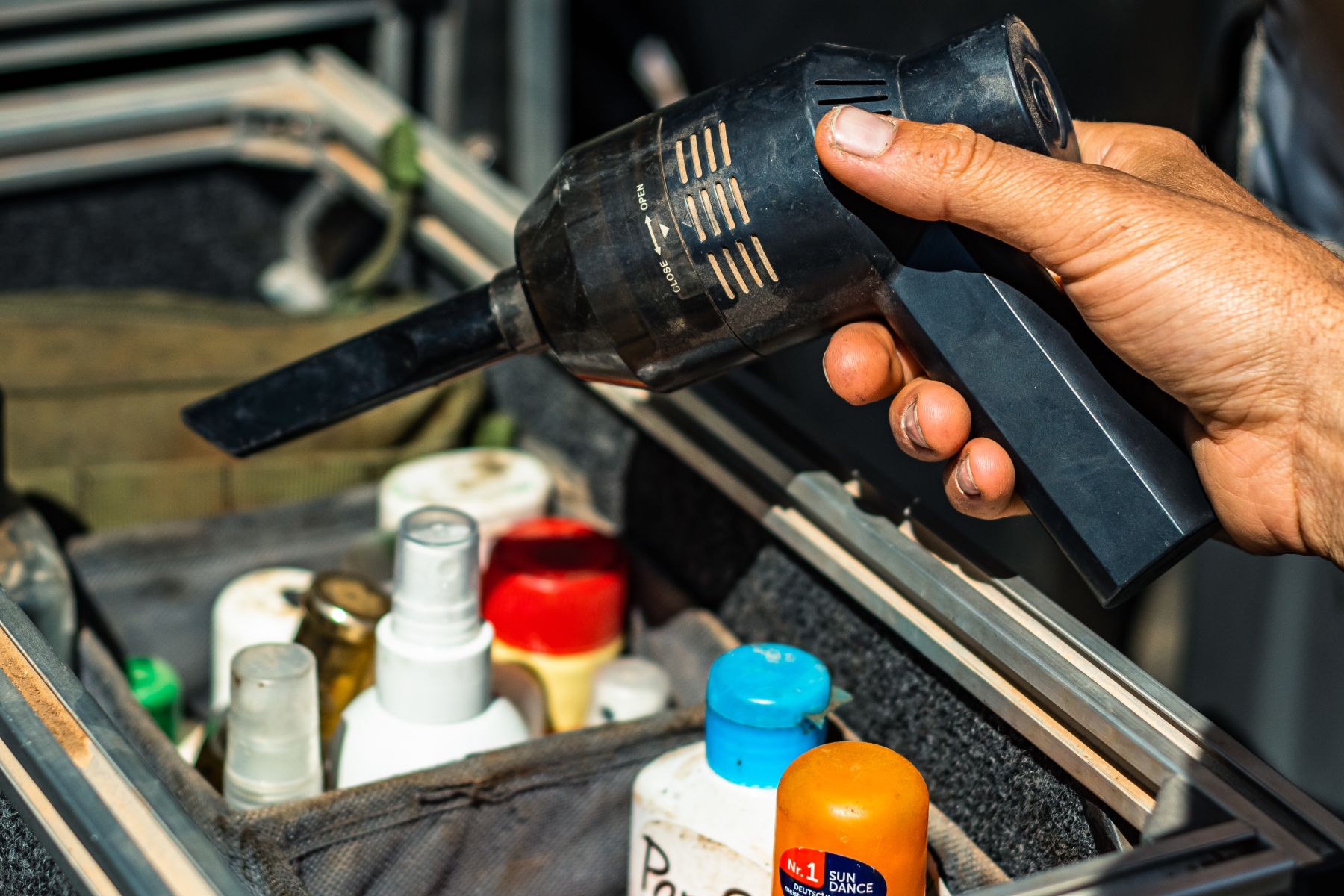
Overlander vehicles, and perhaps especially Defenders, are prone to becoming dusty. It doesn't matter if you're driving in Utah, Morocco, Namibia, or Chile—dust is present on every continent. When you go off-road quite often, you have to become a little indifferent to dust and dirt for your own sanity, but it does feel nice to clean the footwells and perhaps your interior living space (when you have that) once in a while. A duster does not make your car impeccable again—you would need a full clean to achieve that—but it does give you that feeling that it looks a little better, a little homier even than it did before the duster did its job.
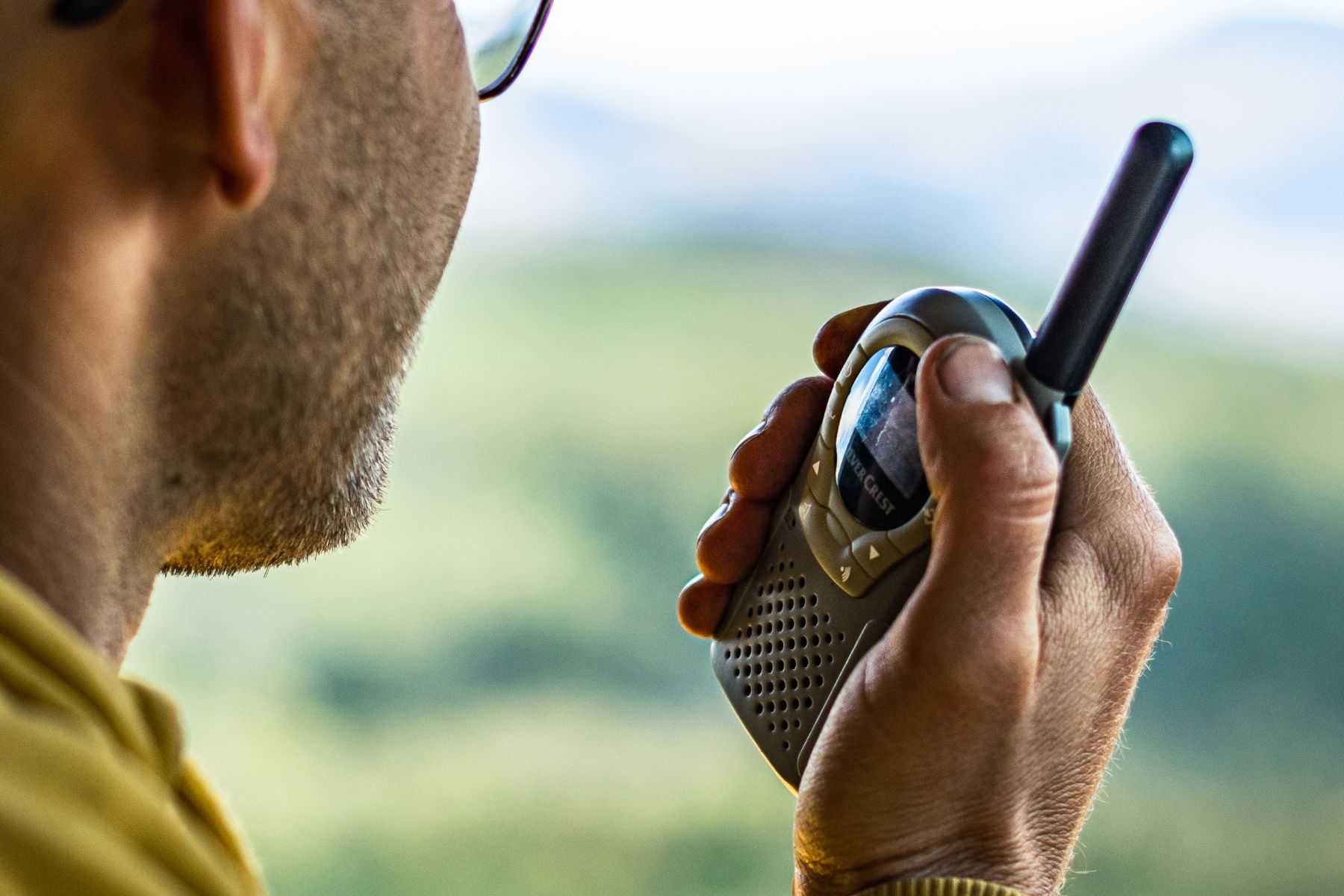
Bonus one! Walkie-talkies
When we finished this blog at 9 random items that work magic, we forget to mention one extra thing; the walkie talkie. Although we haven’t used them throughout all our travels, they can be a great asset on the tracks; from vehicle-to-vehicle communication in convoys or when travel with friends, to communication on the tracks when your partner is scouting the route ahead on foot. Relatively small to bring along, but they work wonders when the scenario is right. Do check local regulations, as they are not allowed in every country.
To us, an overland vehicle is truly quite similar to a normal home. It's where you sleep, spend your day, kick off your shoes, and cook food. But although these 9 items are pretty common in a usual household, they are often forgotten on an overland trip. They are the tucked-away items in your cabinet, that you wouldn't easily think of bringing along. So we're happy to help and nudge you in the right direction.
All images subject to copyright.
Today's explorers
Want to share your story?
We would love to hear how your life has changed, because of adventure.
.png)
More stories
No items found.
Advertisement
©2025 explmore ltd. UK Company Reg. 12586342